
Getting Montgomery County Court Records
The Clerk of Superior Court holds Superior civil, felony criminal, and jury case records. Probate Court keeps probate minute books, estates, guardianships, and the county's traffic files. Magistrate Court holds claims, dispossessory, garnishment, warrant, and preliminary-hearing matters. Each city court keeps its own citations and ordinance cases. Naming the right court keeps a request from landing with the wrong office.
Superior records can be searched with a PeachCourt account. Other options exist too. Try the courthouse counter or a phone request. A written Georgia Open Records Act request works as well, and the clerk's public terminal is another choice. Montgomery County publishes no current Superior checklist for mail, fax, email, or dropbox requests. Confirm the accepted method before sending anything.
- Identify the court from the case number, citation, or prior order.
- State the case number, record type, date range, format, and contact information.
- Use PeachCourt, a public terminal, or the responsible clerk's counter.
- Call first to confirm any mail, fax, email, payment, or certification procedure.
- Ask for a cost and timing estimate, then check the copy against the request.
Montgomery Court Records Without a Form
Montgomery County offers no court-copy form or request tracker. Per the Georgia Attorney General's guidance, a written request goes to the office holding the file. Spell out the court, the case, and the document. Add the dates, the copy type, and how you want delivery. Ask about cost up front.
If that office does not hold the file, ask which Montgomery County court does. Hold off on mailing an original or any payment until the office confirms its method. A written request also preserves your scope and any exemption cited in reply.
Separate inspection from copying. Inspection can answer one narrow question. You need not order every page. A copy request should name the exact docket sheet, order, judgment, or filing. Say whether electronic delivery works for you, but do not assume the county offers it. Request certification at the start if you need it. The clerk must authenticate the copy. For wide date ranges or old files, ask whether search time adds cost. These details help the clerk estimate the work. They also cut the risk of getting the wrong record.
Court Record Types
Montgomery County court records range from a short docket index to the filed papers sitting behind each entry. The Superior Clerk also handles real-estate, UCC, notary, and jury duties, but that land-record portal is not a case search. Look at the court named on the filing to know where the file lives.
- Docket sheets and chronological entries
- Complaints, petitions, answers, motions, and notices
- Signed orders, judgments, decrees, and dispositions
- Filed exhibits, transcripts, and verifications when public
- Probate minute books and estate or guardianship filings
- Magistrate claims, garnishments, and dispossessory files
Municipal citations stay outside the Superior search. Probate traffic records belong to Probate Court, and Magistrate cases stay with Magistrate Court.
Montgomery Probate Records Stay Permanent
Montgomery County Probate Court records its filings in permanent minute books. Older estate and guardianship records live there, not in PeachCourt. Contact Probate directly. Permanent retention does not open every page to the public, and state law can restrict some probate material.
Call Probate Court at 912-583-2681. Have the case, names, year, record type, and the copy you want. When no image exists online, a courthouse search may be the practical route. For older records, give the best date range you have.
Inside a Montgomery County Court Record
A Montgomery County docket is the running index of activity, not the full file. PeachCourt labels its sections "Cases," "Filings," and "Case Docket." Result labels vary, so check the fields the portal actually shows rather than assuming what appears.
| Case number | The court identifier; no Montgomery format was publicly confirmed. |
|---|---|
| Case details | Caption, type, filing date, court, judge, status, and party roles where public. |
| Docket | Filings, settings, orders, resets, and disposition entries in sequence. |
| Documents | Eligible complaints, answers, motions, orders, judgments, exhibits, or transcripts. |
| Settings | Date, time, judge, courtroom, setting type, and reset history when supplied. |
A Montgomery County case lookup can find an index, but the clerk handles authentication and any records missing online.
Montgomery Docket, Image, and Certification
A docket shows events. A filed image shows the paper behind an entry. A certified copy bears the responsible clerk's authentication, and printing a PeachCourt image does not make it certified.
| Form | Purpose | Route |
|---|---|---|
| Docket | Case activity and settings | PeachCourt, terminal, or clerk |
| Filed image | Text of an eligible filing | PeachCourt purchase or clerk |
| Certified copy | Clerk-authenticated record | Original court custodian |
The difference matters when an order is listed but its text stays hidden. The docket confirms the entry, the image supplies the words, and certification supplies formal authentication.
Fees and Certified Copies
According to PeachCourt's document-access guidance, account holders may buy eligible file-stamped documents for $0.50 per page plus a small convenience fee. The exact convenience amount is not stated. Montgomery County publishes no plain-copy, certification, exemplification, search, or docket-sheet fees, so ask the clerk for current prices.
| Item | Amount |
|---|---|
| Eligible PeachCourt image | $0.50 per page |
| Convenience charge | Not located |
| Montgomery plain copy | Confirm with custodian |
| Montgomery certified copy | Confirm with custodian |
Clerk of Superior Court, Tammy C. Foskey
Montgomery County Courthouse
400 S. Railroad Avenue, Mount Vernon, Georgia
912-583-4401
Ask first whether the copy must be plain or certified, since that choice can change both the route and the price.
Excluded Montgomery Record Images
A blank screen does not mean a blank file. PeachCourt leaves out sealed records, adoptions, and proposed orders that were never signed. Some filings predate the online collection, some still live on paper, and some sit with a different Montgomery County court entirely.
Most participating courts offer docket material back to about 2005, according to PeachCourt, yet coverage is not complete even within that span. Ask the clerk whether a redacted public copy exists. When the whole case is missing, double-check the court and the case number, try the clerk or a public terminal, and consider the vendor's missing-case route.
Access rules add another wrinkle. PeachCourt demands an account for its public search and its document purchase path, while its e-filing guidance notes that clerks can offer a free public-access terminal. Montgomery County has not posted that terminal's location or hours, so call 912-583-4401 before you drive over. A terminal lets you inspect a non-sealed official record. The certified copy still comes from the clerk.
Give older files a second look. A paper record may never have been scanned, and a lower-court file does not hop into Superior Court just because both courts serve Montgomery County. Ask whether the file is archived, stored in a minute book, held elsewhere, or restricted. That question gets you further than asking why a docket search came back empty.
Sealed Records and Public Access
Georgia court records start out public. Statutes, rules, and court orders can still narrow that access. Uniform Superior Court Rule 21 lets a court impose supported limits once it weighs harm against the public interest, and Rule 21.6 governs sensitive identifiers. Juvenile records face tighter statutory rules.
Key rules:
O.C.G.A. § 50-18-70 guidance starts from access unless an exemption applies.
Uniform Superior Court Rule 21 governs court access and sealing.
O.C.G.A. §§ 15-11-708 and 15-11-709 govern juvenile preservation and access.
No open-records request can undo a court order. Instead, ask for the public docket, a redacted copy, or the order that spells out the restriction.
Montgomery Open Records Response
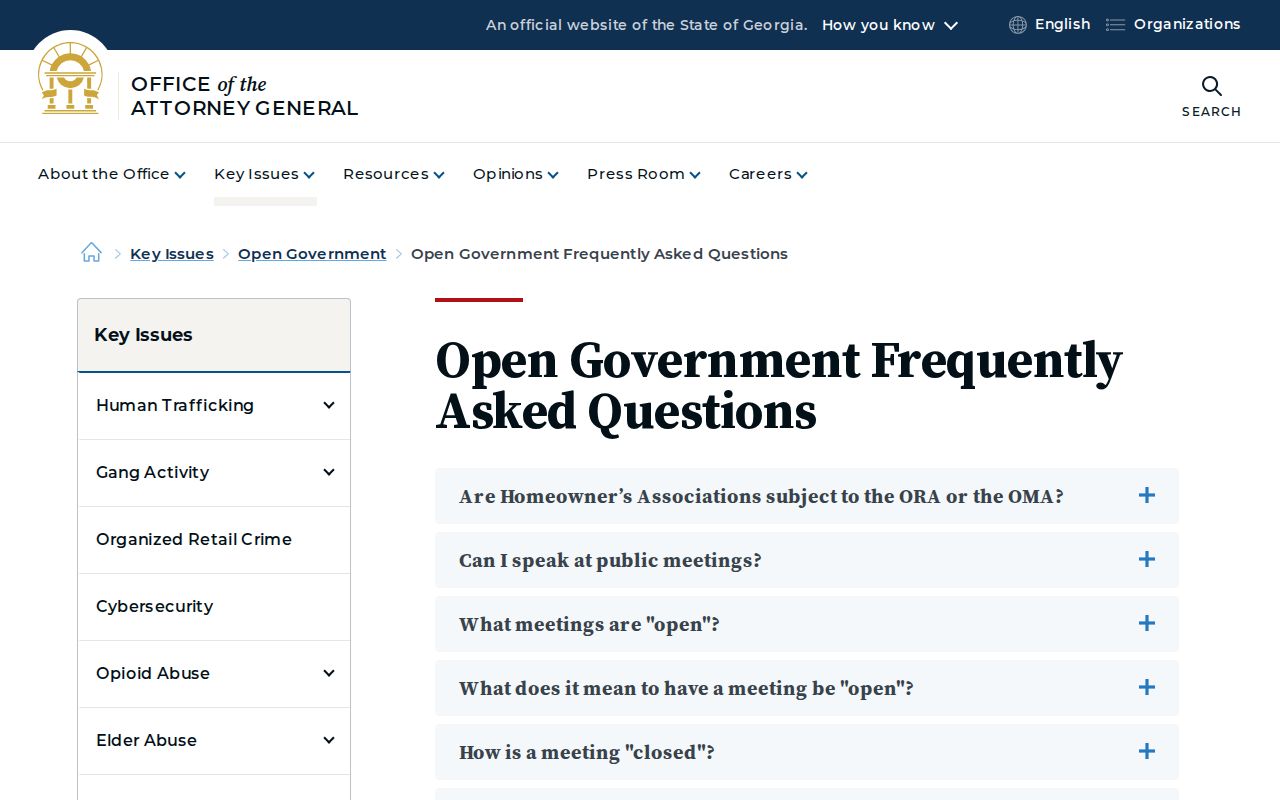
The Georgia Open Government FAQ lays out a three-business-day response framework. That is not a copying promise. A large file will not get copied within three days. A custodian should explain later timing and costs. Any denial should cite an exemption.
Review the official request instructions for how to submit one properly.
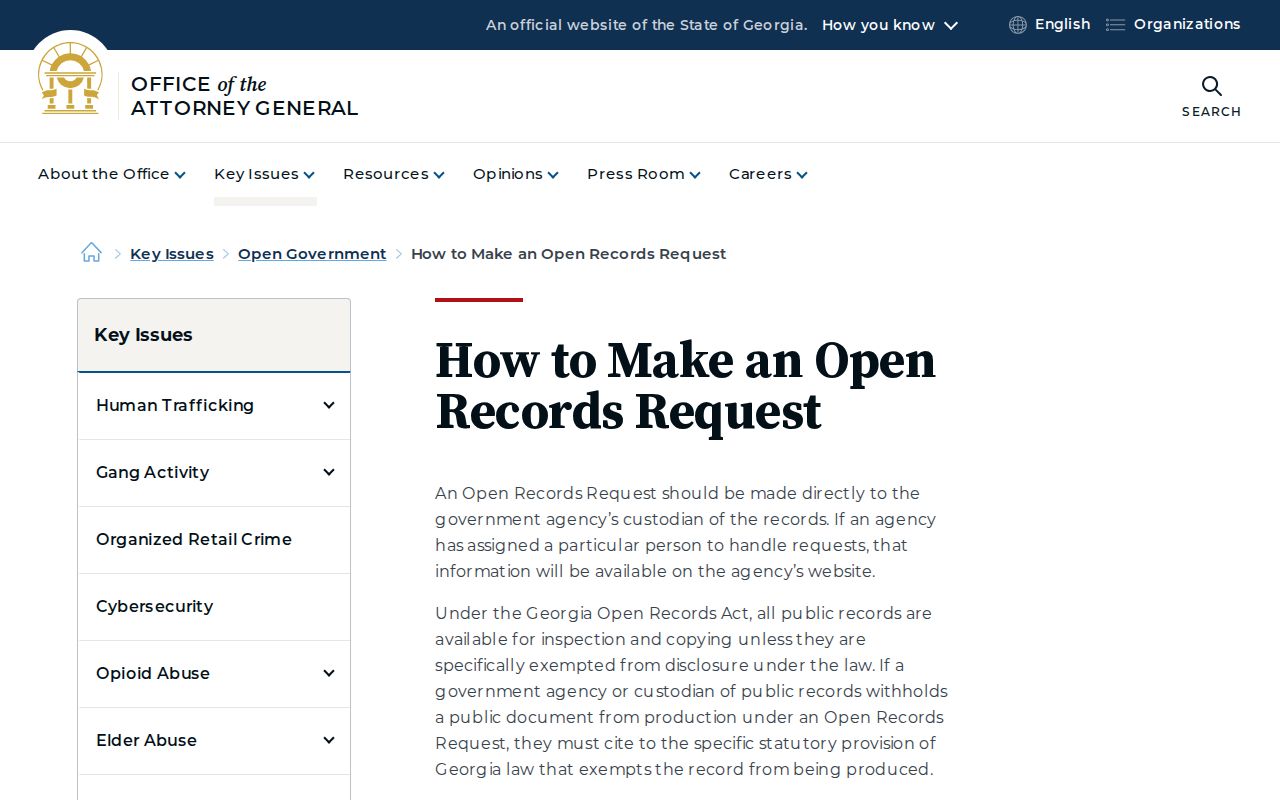
Under that framework, the request goes to the custodian, and who that is depends on which Montgomery County court holds the record. The state FAQ walks through the details.
Use the state framework together with the right local court route. PACER pricing matters only if the case is federal.
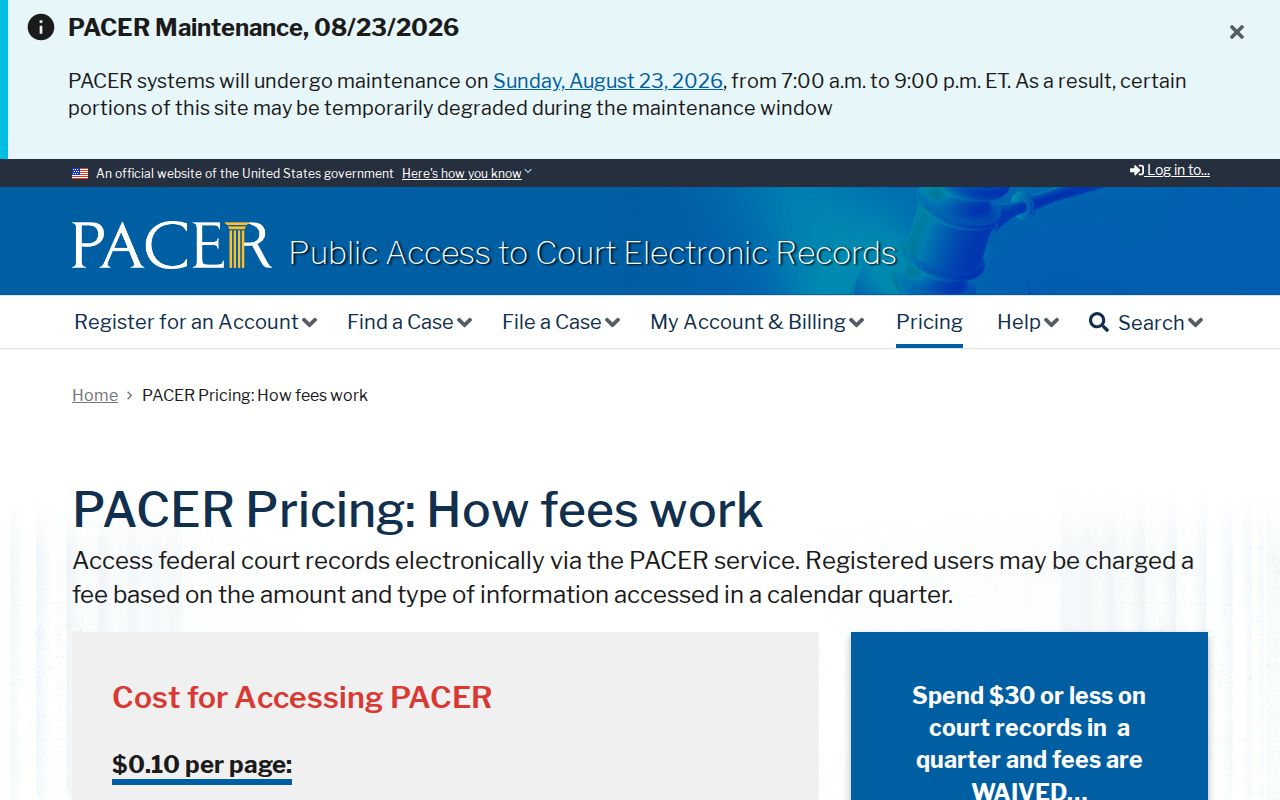
PACER does not replace PeachCourt or a request to a Montgomery County clerk. For federal matters, Montgomery County falls in the Southern District of Georgia's Dublin Division. That division is a separate custodian. It runs its own docket system. A state or county case does not belong there just because its parties live nearby. Jurisdiction decides where the record lives.