
Searching Montgomery County Civil Dockets
Superior Court civil searching starts with the official Georgia Courts E-Access directory. That directory points Montgomery Superior Court to PeachCourt. PeachCourt needs an account. Its help path tells you to choose Search, then Cases. Pick the county and court next. Then type the exact case number and run the search. No public anonymous party-name search for Montgomery is documented there.
Missing the exact number? Clerk of Superior Court Tammy C. Foskey can help at 912-583-4401. You can also ask at the clerk's counter. PeachCourt notes that clerks may offer a free public terminal. For Magistrate Court civil claims, call 912-583-2170 or visit the counter. The county posts no Magistrate civil search form. Any written request should state the court. Include the case number if known, the record type, a date range, your preferred format, and contact information.
- Identify the court from the pleading, notice, or type of claim.
- For Superior Court, use an account and select Montgomery County and Superior Court in PeachCourt.
- Enter the exact case number and verify that the caption, court, and filing details match.
- Read the docket entries separately from the documents behind them.
- Use the responsible clerk for a terminal view, an older file, a public redacted copy, or certification.
Montgomery Civil Search at PeachCourt
PeachCourt wears two hats in Montgomery County. It is the Superior Court's public search point. It is also the court's required e-file vendor. The jobs are related but distinct. Attorneys file their civil cases through the service. Anyone else who wants to search the docket or pull eligible file-stamped images must first create an account. Keep one more thing in mind. The Georgia directory is only a router; it points you to the right vendor. It does not host statewide results.
The Georgia e-file provider directory shows Montgomery Superior Court listed as mandatory on PeachCourt.
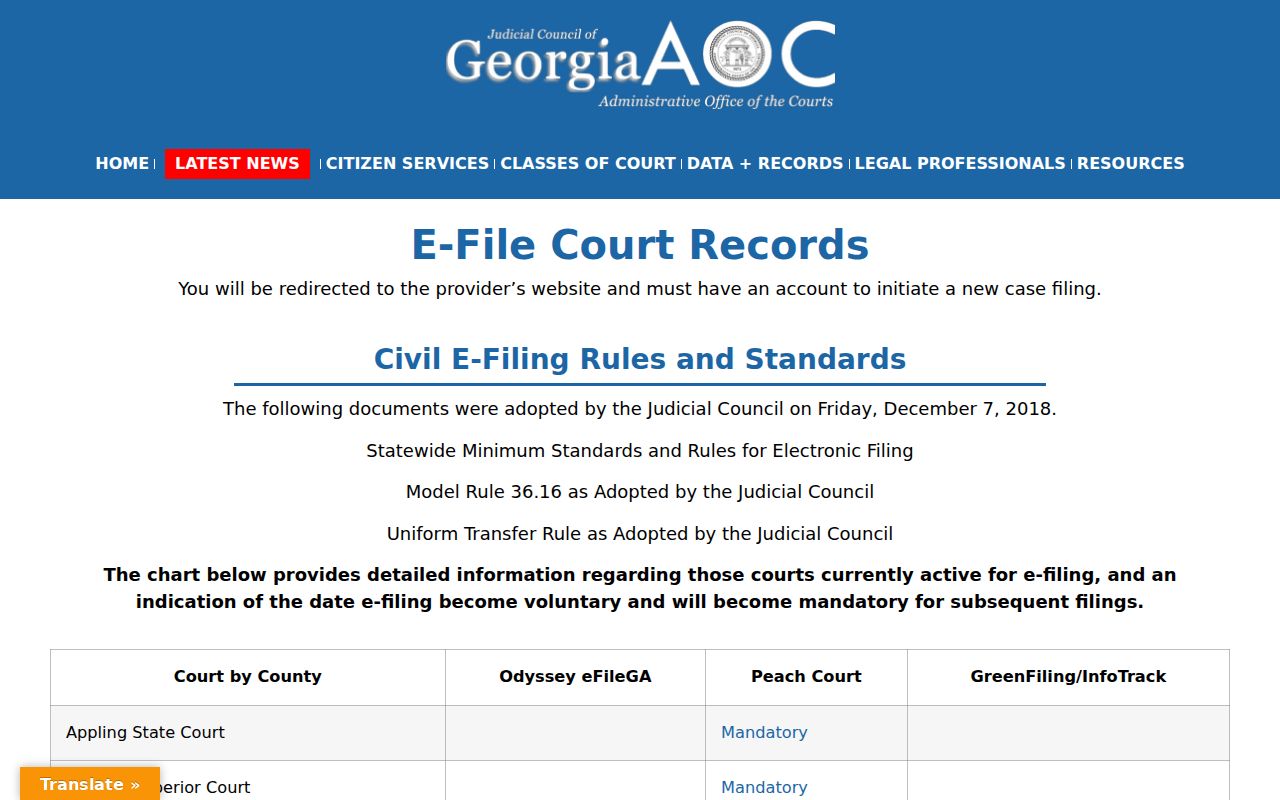
That listing settles the vendor question. It does not finish the search. After logging in, you still have to pick the right county, the right court, and the exact case number yourself before any Montgomery civil docket entry comes back.
| Confirmed control | How it is used |
|---|---|
| County | Select Montgomery County rather than relying on a broad statewide search. |
| Court | Select Superior Court; Magistrate and Probate files are not folded into this route. |
| Exact case number | Use the court-issued identifier. The local civil number format was not published. |
| Search | Open the matching result and verify the court and caption before relying on entries. |
Inside a Montgomery County Civil Docket
The account-gated PeachCourt view did not expose a live Montgomery civil record. The exact field names, status options, pagination, and export controls remain unknown. Plan on checking the basics once you are logged in: case number, filing date, court, judge, case type, caption, parties, settings, disposition, and document availability. Remember what a docket is. It is an index, nothing more. A file-stamped document is the image behind an entry. Only the clerk can issue a certified copy that is authenticated for official use.
| Case Number | The court's identifier. Do not assume YYYY-CV-##### is Montgomery's format because no local format was published. |
|---|---|
| Parties | Plaintiff and defendant, or petitioner and respondent, when the public view permits display. |
| Filings | Complaint, petition, answer, exhibit, notice, verification, or another filed item. |
| Motions and Orders | Requests made to the court and the rulings entered by the judge. |
| Settings | Hearing dates, scheduling activity, continuances, and resets when recorded. |
| Disposition | Dismissal, judgment, decree, or other final action as the official docket states. |
Montgomery Magistrate Claims Under $15,000
Not every civil fight in Montgomery County starts in Superior Court. Smaller money claims, those under $15,000, belong to Magistrate Court instead. The official Montgomery County Magistrate Court page spells out the full caseload. The list covers contract and personal-injury suits, property damage, dispossessory actions, garnishments, abandoned-vehicle and mobile-home cases, personal-property foreclosures, FiFas, and levies. Those records stay with Magistrate Court. They do not flow automatically into the PeachCourt route. That route serves the Superior Court civil docket only.
Dial 912-583-2170 for the file, a hearing date, or the current copy fee. The staff can also explain the copy route over the phone. Payment is simple but limited. That office takes cash, check, and money order, yet it does not accept credit cards. No civil docket format or copy fee is published. Ask directly before you plan on a cost or a turnaround.
Civil Case Types on the Docket
Civil cases reach Montgomery Superior Court in many forms. Contracts, premises-liability claims, divorce, and title and equity matters can all land on its docket. So can any civil claim not sent to a lower court. The reach is broad. The Superior Clerk also keeps real-estate and UCC records alongside case files. Treat those indexes as their own tools. They are not a civil case docket, and they will not track a lawsuit's progress.
| Matter | Likely record holder | Key distinction |
|---|---|---|
| Major civil litigation, divorce, title, equity | Superior Court Clerk | Search the court case through PeachCourt or the clerk. |
| Money claim under $15,000 | Magistrate Court | Use the Magistrate file and hearing route. |
| Dispossessory or garnishment | Magistrate Court | Service, judgment documents, and writ steps matter. |
| Estate or guardianship | Probate Court | Probate minute books are a separate record route. |
| Deed or UCC filing | Superior Clerk's land or UCC system | A property or lien index is not a civil lawsuit docket. |
When Montgomery Civil Documents Are Offline
A docket entry can exist even when its image is absent. PeachCourt lets account holders view eligible file-stamped documents. The cost is generally $0.50 per page plus a small convenience fee. Most participating courts, it says, hold docket material back to about 2005. Not every document makes it online. Sealed records, adoption files, and proposed unexecuted orders are excluded outright.
When an image is missing, the reason could be one of three things. The document may not be digitized. It may be restricted. Or another court may hold it. Ask first, then request the public version from the responsible clerk. Older probate material often sits in the Probate Court's permanent minute books, which remain the proper source. Magistrate matters stay with the Magistrate office. It controls its own file.
Do not guess from an empty image slot. A missing image can reflect age, access law, vendor coverage, or the wrong court rather than the absence of a filing.
Montgomery Civil Docket Settings and Hearings
A notice of setting means a proceeding is scheduled, nothing more. It is not a ruling. Dates can move by continuance or reset. The docket may reflect that change well after the original notice went out. So confirm the latest date through the case docket and the responsible clerk. A county event calendar is not a court calendar. Relying on it invites a wasted trip.
Scheduling differs by court. Superior civil settings may follow the Oconee Judicial Circuit and the judge assignment. Magistrate Court posts its own hearing information for claims and dispossessory matters. Writs of possession add a wrinkle: the Sheriff schedules execution, and weather can push a removal to a new day. That later operational date is separate from the hearing date, and the two are not interchangeable. For a broader calendar route, the Montgomery County court dates page covers it once built.
Montgomery Dispossessory and Garnishment Entries
Magistrate civil files hold local procedural detail. A Superior Court search simply will not show it. Take a dispossessory. If the plaintiff also wants a money judgment, service on the defendant is required. A writ of possession issues only after the court acts. The Sheriff sets the date to carry it out. Weather can push that physical step back while the court entry itself stays right where it was filed.
- Dispossessory
- A Magistrate Court possession proceeding with its own service and writ steps.
- Writ of possession
- The court-authorized process whose execution is scheduled through the Sheriff.
- Garnishment
- A Magistrate matter for which the county page says the filing must include a copy of the judgment.
- FiFa
- A judgment-related record type named among Montgomery Magistrate Court's civil work.
A complaint is only a request, and a filed garnishment tells you nothing final on its own. To see the actual outcome, read the later entries and orders in the sequence the court wrote them.
Federal Civil Cases from Montgomery County
Federal suits filed in Montgomery County do not travel through the state-court docket at all. They land in the Northern District? No. The Southern District's official counties list places Montgomery County in the Dublin Division, and that assignment decides where a federal civil filing is heard. For docket access, the public side is PACER. CM/ECF handles the actual filings. Neither system has anything to do with a PeachCourt Superior civil result. Keep the two straight.
The Southern District CM/ECF service is the page the court itself maintains for attorneys and self-filers to submit federal civil pleadings electronically.
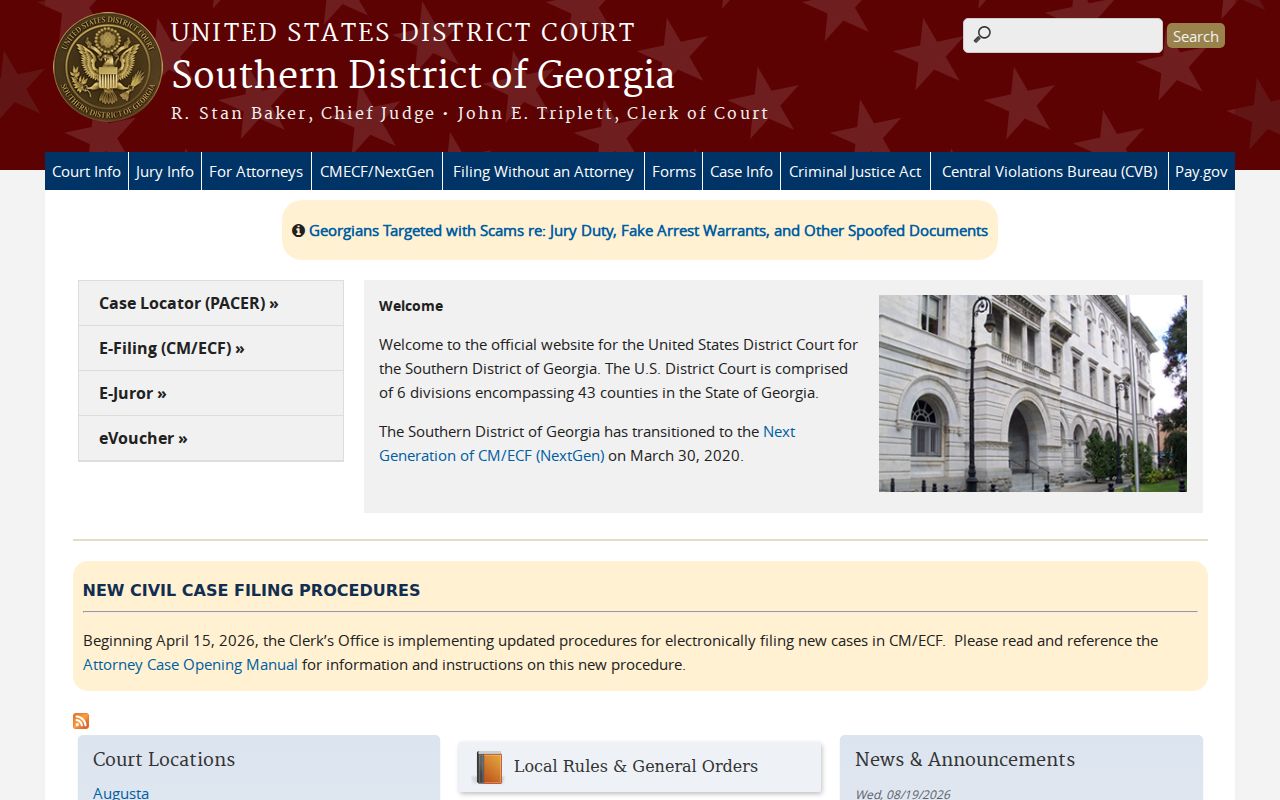
Federal court is a different jurisdiction. It keeps its own records even when the parties and events are rooted in Montgomery County. The Southern District of Georgia court site posts the court notices and division information you would need for that side of things.
Let the pleading name your destination. Whichever court it names, state or federal, search that system alone instead of treating the two as one shared docket.
Montgomery Civil Docket Access Rules
Uniform Superior Court Rule 21 starts from the premise that court records are public. That presumption bends, though. It gives way when law or procedure authorizes a limit and the harm clearly outweighs the public interest. Rule 21.6 and O.C.G.A. §9-11-7.1 both deal with sensitive identifiers. Even with public access, sealed or confidential documents will not surface online. When a lower-court decision faces review, the judiciary's petition-for-review clerk bench card walks clerks through record transmission. It also covers costs and the listed exceptions. Keep in mind it is procedural guidance, not a case docket.
Use the correct custodian.
Uniform Superior Court Rule 21 governs public access and supported restrictions in Superior Court.
Georgia Open Records guidance says to direct a request to the records custodian, preferably in writing, and ask that any denial identify its exemption.
Under the state's general framework, an office owes you production or a timing, cost, or exemption notice within three business days. A sealing order still wins over that deadline. So what can you do when only part of a file is restricted? Request the segregable public material, or a redacted copy. Have the clerk quote any copy or certification charge up front. Montgomery has not published a local civil-copy fee. The quoted price is the only way to know.