
Montgomery County Court Calendars Explained
Think of a court calendar as a schedule, not the full Montgomery County court docket. Superior Court work is grouped on the Oconee Judicial Circuit calendar. The rows sort by county, date, judge, and setting type. Montgomery rows there have carried criminal terms, motions, negotiated pleas, arraignments, pleas, bonds, and criminal calendars. Those labels describe the kind of work planned for that day. What they leave out matters just as much. A calendar row shows no party names and no case number. It lists no filed papers and no result or full history for any one case.
Montgomery County sits in the six-county Oconee Judicial Circuit. A circuit judge can preside over a Montgomery setting from chambers located in another county. Probate Court keeps its own schedule. So do the municipal courts, for the matters within their jurisdiction. Magistrate settings need confirmation from that court too. In short, the responsible court controls whether a setting actually happens, not a general county calendar.
Montgomery Court Dates on Oconee Rows
For the clearest public picture of how Montgomery Superior Court work is grouped, look at the official Oconee Circuit calendar PDF. It shows the layout in plain columns. One caution applies, though. The sample was last updated in 2023 for the 2024 calendar year, so treat it as a guide to the format rather than as confirmation of a current appearance.
Term A block of circuit court work assigned to a county and judge. Arraignment The proceeding at which an accused person is formally called to answer a charge. Negotiated plea A setting for a proposed plea resolution. Motion A request for a judge to decide an issue before final disposition. It is a request, not a ruling.
The Montgomery entries teach two lessons at once. First, the county label carries real weight. So does the judge column, when you read a circuit calendar. Second, an old PDF can never stand in for a current notice. A July 2026 Judicial Nominating Commission notice reported a circuit vacancy. It followed Judge Howard C. Kaufold Jr.'s death. Calendar columns bearing his name are historical context, not proof of a present assignment.
Finding Your Court Date
Begin with the paper in hand. The citation, summons, order, bond paper, or hearing notice names the court you need. From there, use the matching Montgomery County channel. A Superior Court matter can be checked against the Oconee Circuit publication and the case docket. Probate traffic, Magistrate, Juvenile, and city matters each run through their own offices. Keep the case or citation number close. Never guess a format when the paper is missing.
- Read the court name and Montgomery County case or citation number from the newest filing.
- Check the Oconee Circuit calendar for a published Superior setting, or the responsible lower court's official page.
- For Superior Court, follow Georgia E-Access to PeachCourt and inspect the case docket after signing in.
- Call the responsible clerk or visit the counter when no case-specific date is shown online.
- Compare the result with the latest filed notice, order, or information from counsel.
- Confirm the date, time, court, and location directly before appearing.
Phone lines work well here. The Clerk of Superior Court takes calls at 912-583-4401 for the Montgomery Superior docket. Probate Court uses 912-583-2681, and Magistrate Court uses 912-583-2170. PeachCourt also states that clerks may provide a free public terminal. An attorney or another authorized case representative is another sound source when one is involved. A printed courthouse docket call can add same-day context. But match it to the right case and court before relying on it.
Montgomery County Events Are Not Hearings
Montgomery County's public county calendar offers date-range fields and relative-date controls. It also has a department selector and search controls. Those tools can look like a docket search. They are not. They cover county events, not Superior, Probate, Magistrate, or municipal case settings. The dated legacy clerk calendar showed an upcoming-court-calendars heading but carries no current entries. It is a limited historical page rather than a source for current case calendars.
Calendar check: A county event result does not establish a Montgomery County court date; confirm every case setting with the court that holds the file.
This distinction stops a common mistake before it starts. A meeting date can be valid county information and still not be a hearing. For a known Superior matter, move from the calendar to the contextual Montgomery County case lookup, then verify the setting with the clerk.
How to Read a Court Setting
Read each Montgomery County calendar line in context. The Oconee sample confirms public columns. They cover date or date range, county, judge, and setting label. Case-level details may live only in the filed notice or an account-gated docket. So if a courtroom, party name, or case number is missing from a circuit calendar, that omission does not make the setting invalid.
| Date | The scheduled day or term range; check for a later reset. |
|---|---|
| Time | The appearance time if supplied by the responsible court or notice. |
| Courtroom | The room or location, which was not exposed in the circuit sample. |
| Judge | The assigned circuit judge shown in a calendar column, subject to current verification. |
| Setting Type | Term, plea, bond, motion, arraignment, or another stated calendar purpose. |
Write it all down. Note the court, county, date, time, judge, case number, case style, setting type, and any reset notice. That small record makes it much easier to explain a mismatch when you speak with the clerk.
Montgomery Probate and Municipal Dates
Montgomery Probate Court posts a standing traffic setting. It runs the second Wednesday of each month at 10:00 a.m. Arrive by 9:45 a.m. and check in. Go by the date printed on your citation. That recurring slot is not a guarantee for a reset matter. A citation written by a city may carry a different court date too. Match the Probate traffic setting against the ticket. Check with the court as well before you rely on it.
Mount Vernon's city calendar has listed Municipal Court. It sits on the third Tuesday at 4:00 p.m. You cannot search it by party or case number. That limit holds across the list, week, and month views. City Hall links out to JusticeONE. The Police page, though, calls that link citation-payment-only, and payment access is not a case calendar. The official Georgia Municipal Courts Directory covers the rest. Go through the issuing city for any other Montgomery County municipal matter.
Continuances, Resets, and Cancellations
A continuance pushes a setting to a later date. A reset creates a new setting after an earlier date changes. Neither one dismisses the Montgomery County case. A calendar PDF can also sit online. The judge assignment or schedule behind it may have shifted long before. That is why the Oconee Circuit directory labels its calendar a general guide. Readers must verify dates with the clerk.
When information conflicts, start with the newest filed order or notice. Pull the account-gated PeachCourt docket for a Superior matter, then call the Clerk of Superior Court. For Probate, Magistrate, or a municipal case, phone that office directly. Ask whether the old date was continued. Ask whether a new order was entered. Also ask whether the time or location moved. Never infer a new hearing from an old recurring calendar pattern.
Montgomery Federal Court Date Context
Federal matters that grow out of Montgomery County land in the Southern District of Georgia's Dublin Division, not on the county Superior Court calendar. The Southern District civil local rules page lays out the federal division and filing framework that official page displays.
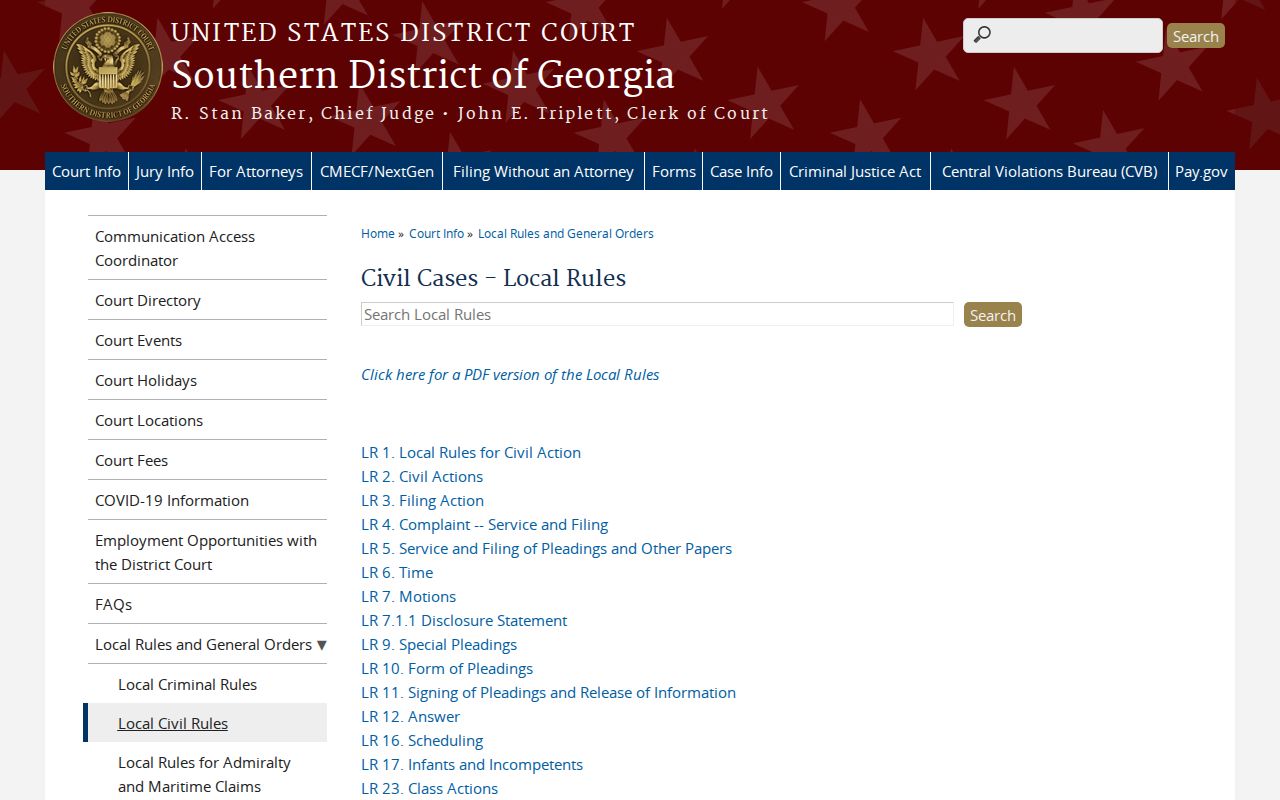
Those rules describe a separate federal process. A federal date belongs to the federal docket and court notice, not to a Montgomery County court calendar. The Dublin Division information page gives the division contact and staffing details that official page provides.
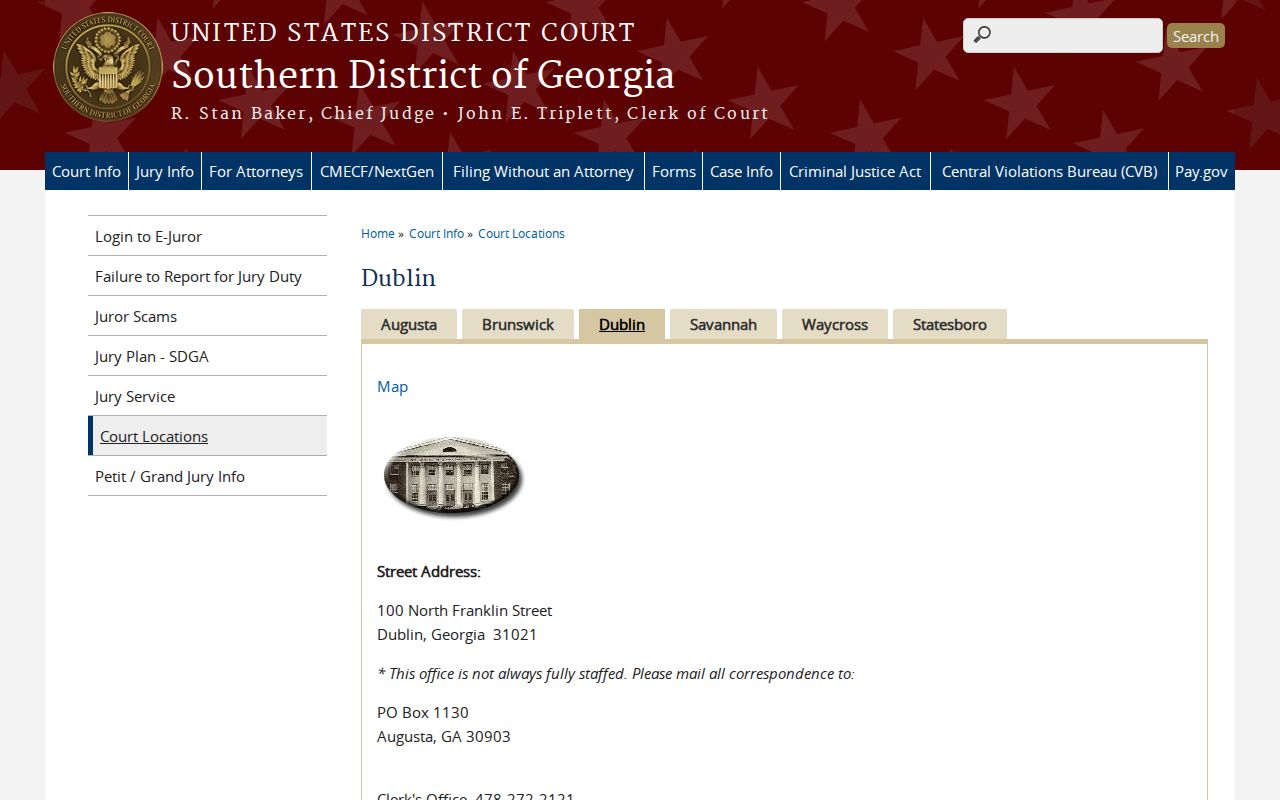
That division page can help route a federal inquiry. It does not change which local clerk confirms a Montgomery County state-court setting.
If You Miss a Court Setting
Call the court named on your case paper right away. Give the clerk the case or citation number. Give your full name too. Add the scheduled date and the type of setting if you know it. Ask whether a new Montgomery County court date has been entered. Then ask what steps the court wants from you. If counsel represents you, reach out to counsel too. An old PDF will not save you here. An online payment never fixes a missed appearance.
Missed a setting? The official Georgia ticket guidance directs a person who missed court to contact the issuing court directly.
A Montgomery court controls the response, and no local source reviewed confirms one automatic result for every missed date.
Prompt advice from a licensed attorney may be useful when a warrant, bond, or other consequence could be involved.
Route each missed setting to the right place. Probate traffic goes to Probate Court. A Mount Vernon citation belongs with the city court or City Hall, and Superior matters go to the Clerk of Superior Court. Going court-first beats waiting for a general calendar to update.
Montgomery Calendar Versus Case Docket
A calendar tells you when a class of work is planned. A docket tracks one case. It holds that case's filings, actions, settings, and result. A Montgomery row in the Oconee PDF might show a plea or arraignment block with a judge and date. Yet it may omit every party and case number. PeachCourt, after account access, may hold the related Superior Case Docket.
| Calendar | Case Docket |
|---|---|
| Groups work by date, county, judge, or setting type | Organizes filings and events under one case |
| May omit names and case numbers | May show case-level fields after authorized access |
| Useful for term and docket-call context | Useful for checking the latest filed setting |
Use both tools when you can. Then confirm with the court that owns the setting. That last check matters most when a date has moved or the public calendar is stale.